As an Amazon Associate, we earn from qualifying purchases. Some links on this site are affiliate links at no extra cost to you. Our recommendations are based on thorough research and editorial judgment.


Bedroom Air Quality: CO2, Particulates, and Fresh Air Exchange Rates

To maintain good bedroom air quality, monitor CO2 and particulates regularly. Keep CO2 levels below 800–1,000 ppm for ideal health. Open windows daily for 5–15 minutes to guarantee proper fresh air exchange. Aim for at least 0.35 air changes per hour to dilute indoor pollutants. Use NDIR CO2 monitors placed at breathing height for accurate readings. Implement a night-purge strategy before bedtime to improve airflow. Discover more strategies for effective monitoring and ventilation.
Key Takeaways
- CO2 levels above 800–1,000 ppm indicate discomfort and can impair cognitive function in bedrooms.
- Fresh air exchange, ideally at 0.35 air changes per hour, dilutes indoor pollutants like CO2 and particulates.
- Regularly open windows for 5-15 minutes daily to improve ventilation and maintain healthier indoor air quality.
- Use NDIR CO2 monitors positioned at breathing height for accurate tracking of indoor air quality trends.
- Implement exhaust systems in areas like bathrooms and kitchens to enhance airflow and reduce indoor pollutant concentration.
The Importance of Monitoring CO2 Levels in the Bedroom
You may be interested


Why is it essential to monitor CO2 levels in the bedroom? Elevated CO2 levels can reach between 1,200 and 2,500 ppm overnight due to poor ventilation. Monitoring is vital because levels above 800–1,000 ppm indicate discomfort and may reduce cognitive function. Bedrooms with closed windows often lack fresh air circulation, risking levels exceeding 1,500 ppm at night. To guarantee proper indoor air quality, use an air quality monitor at breathing height. Regularly check CO2 levels to manage ventilation rates effectively. Open windows or use box fans to maintain healthy CO2 levels. Taking these actions can enhance bedroom comfort and improve overall sleep quality, making a significant difference in daily performance and well-being. Additionally, maintaining optimal humidity levels is crucial for creating a comfortable sleeping environment.
Recommended Products

Large format purifier with HEPA H13 grade filtration.

Handheld digital meter measures ambient level of carbon dioxide (CO2) to monitor indoor air quality and performance of heating, ventilation, and air-conditioning systems
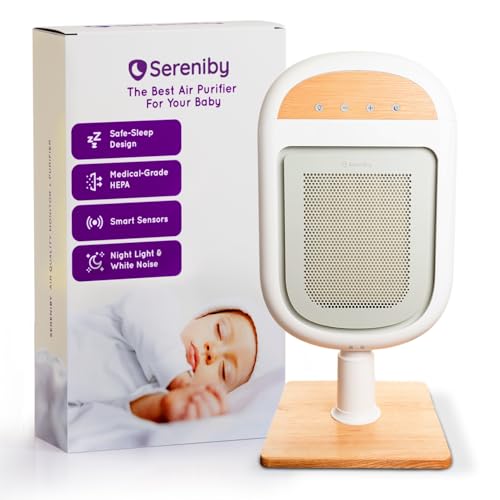
The Only Air Purifier Designed for Safe Sleep – Engineered to gently circulate clean air across your baby’s breathing zone, sweeping away CO₂ and airborne pollutants for complete overnight protection.
Understanding the Sources of CO2 and Particulates

Understanding the sources of carbon dioxide (CO2) and particulates is essential for maintaining good air quality in bedrooms. CO2 primarily comes from human respiration. Each person exhales around 0.5 to 1 liter of CO2 every hour. In poorly ventilated bedrooms, CO2 levels can reach harmful concentrations of 1,200–2,500 ppm by morning. Particulate matter originates from indoor environments, including dust mites, pet dander, and volatile organic compounds (VOCs) from furniture and bedding. These particles can contribute to poor indoor air quality. To improve environmental health, employ ventilation systems that achieve at least 0.35 air changes per hour (ACH). This rate guarantees adequate air exchange, allowing for fresh air to dilute CO2 and particulates, thereby promoting better respiratory processes. Additionally, using hypoallergenic options like blankets can help reduce particulate exposure and improve overall comfort in bedrooms.
Recommended Products

COMPACT DESIGN, MAXIMUM EFFICIENCY - Space saving design without compromising on HyperHEPA filtration, capturing 99.5% of particles down to 0.003 microns. This room air purifier removes mold, pollen, dust, smoke, allergens, pet dander, asthma triggers, and even ultra-fine viruses and bacteria from the air. Perfect for spaces up to 1240 sq ft.

Effectively cleans air of a large space in your home or office up to 512 sq. ft. for a fresher, cleaner atmosphere

INDUSTRY-LEADING CLEANING POWER - iAdaptAir has one of the highest clean air delivery rates (CADR) on the market: Pro size boasts 706 CFM. Covers 5,474 sq. ft. in one hour or 1,059 sq. ft. with 5 air exchanges per hour.
The Role of Fresh Air Exchange in Air Quality

Maintaining indoor air quality requires effective fresh air exchange. In bedroom environments, fresh air exchange greatly dilutes indoor pollutants, such as CO2. Aim for CO2 levels below 1,000 ppm for better health outcomes. Outdoor air usually has around 400 ppm, making it healthier for breathing. Recommended ventilation rates for bedrooms are 0.35 air changes per hour. Open windows for at least 15 minutes daily to increase fresh air exchange. This simple action can greatly reduce CO2 levels and improve indoor air quality. Prolonged elevated CO2 levels, reaching upwards of 1,200–2,500 ppm overnight, can lead to negative health effects like grogginess. Consistent fresh air exchange promotes improved sleep quality and overall wellness in indoor spaces. Choosing a neutral color palette for bedroom decor, such as light oatmeal hues, can also contribute to a calming environment that supports better air quality.
Recommended Products

5-STAGE FILTRATION FOR CLEANER AIR - Featuring a filter with integrated Activated Carbon and Zeolite, this air purifier captures airborne particles, including dust, pollen, pet dander, mold, smoke, and VOCs, offering a healthier, cleaner environment for your home or office.
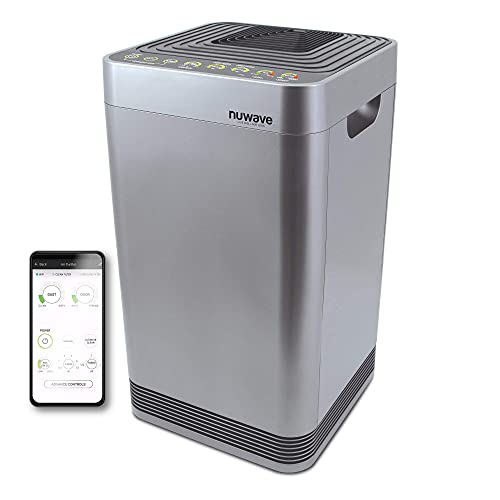
EFFECTIVE FOR EXTRA LARGE ROOM UP TO 2,934 SQ. FT. - The U.S. EPA estimates that the air in your home can have as much as 5 TIMES MORE pollutants than outdoors. Although the air may look clean to the naked eye, you could be unknowingly inhaling harmful air. OxyPure is proven to effectively purify the air up to 2,934 sq. ft. per hour.

IDEAL FOR BEDROOMS, KITCHENS & LIVING ROOMS Ideal for large bedrooms, kitchens, and larger shared spaces. Rapidly cleans 630 ft2 in 15 minutes & up to 2,520 ft2 in 1 hour, delivering consistent purification where you sleep, work, and relax.
Best Practices for Maintaining a Healthy Bedroom Environment

To guarantee a healthy bedroom environment, individuals should take proactive steps toward ideal air quality. Maintain CO2 levels below 800–1,000 ppm to prevent an unhealthy bedroom environment. Open windows for 5–15 minutes daily to enhance fresh air exchange rates and reduce CO2 concentrations. Utilize NDIR CO2 monitors at breathing height to provide real-time data on indoor air quality, enabling timely ventilation actions. Implement a night-purge strategy by opening windows before bedtime to improve air circulation and decrease indoor air pollutants. Additionally, use exhaust systems in bathrooms and kitchens to promote fresh airflow, further supporting efforts to maintain air quality. Following these practices will greatly improve sleep quality and overall well-being. Furthermore, incorporating a large room humidifier can significantly enhance moisture levels and overall air quality in the bedroom.
Recommended Products

ADVANCED INFRARED SENSOR: more stable and lower possibility of being contaminated, strong anti-interference ability, and with a sensor life of 40,000 hours

【Professional 16-in-1 Real-time Air Quality Monitor】: With real-time detection of PM1.0 | PM2.5 | PM10 | CO2 | TVOC | HCHO | TEM | HUM, along with 7 kinds of AQI alert buzzers function, this monitor ensures you always know what's in the air around you.
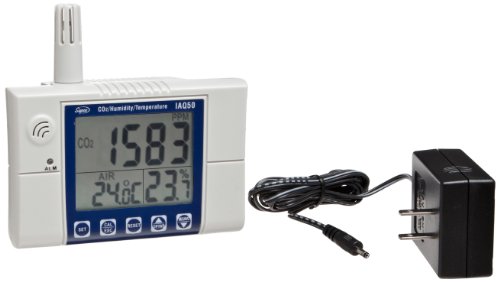
INDOOR AIR QUALITY METER - The CO2 meter measures Carbon Dioxide levels, Temperature and Humidity with Dew Point and Wet Bulb. Use for continuous monitoring of residential, and professional environments, such as warehouses, restaurants, garages, and greenhouses.
Tips for Effective CO2 Monitoring and Ventilation

Effective CO2 monitoring requires careful placement and consistent practices. Position NDIR sensors at breathing height, away from windows and HVAC airflow, to guarantee accurate CO2 levels. Regularly open windows for 5-15 minutes to promote fresh outdoor air circulation, which can greatly lower elevated CO2 levels. Aim to keep indoor CO2 levels below 800-1,000 ppm; levels above 1,200 ppm suggest poor ventilation. Use mechanical ventilation systems to regularly introduce outside air, especially in tightly sealed homes. Log indoor CO2 data frequently to track trends and adjust ventilation strategies as needed. These actions help maintain acceptable indoor air quality and ideal oxygen levels, guaranteeing comfy and healthy sleeping environments. Prioritize air exchange rates for improved overall air quality.
Recommended Products
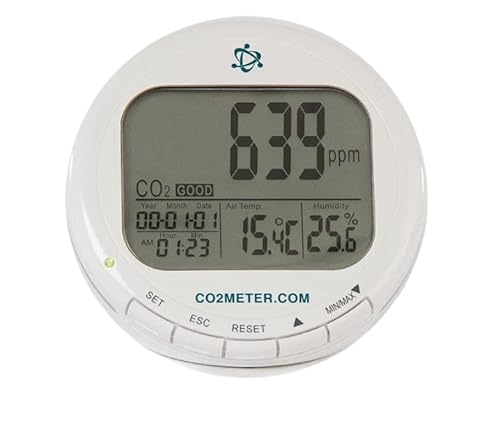
Provides accurate information about the quality of air in your home, office or greenhouse

8-IN-1 MULTIFUNCTIONAL CO2 MONITOR. Adopts SenseAir NDIR carbon dioxide sensor, Dart HCHO sensor, and Temtop professional-grade particle sensor. Gather the world's top technology to provide you with comprehensive air pollution monitoring.

BREATHE EASILY: Aranet4 CO2 meter measures CO2 levels, temperature, relative humidity, and atmospheric pressure in real-time, empowering you to make informed decisions for healthy ventilation. No wonder it's the top-rated indoor air quality monitor in Amazon's CO2 monitor segment!
Frequently Asked Questions
What Is the Acceptable CO2 Level in a Bedroom?
The acceptable CO2 levels in a bedroom should remain below 800 ppm, according to health guidelines. Effective room design and ventilation are vital for maintaining air purity, measuring CO2, and ensuring ideal indoor air quality.
Can CO2 Get Too High if I Sleep With My Bedroom Closed?
Sleeping in a closed bedroom may result in elevated CO2 levels, influenced by room size and occupancy levels. Employing ventilation systems, air purifiers, and indoor plants, along with breathing strategies, can mitigate health impacts on sleep duration.
What Causes High CO2 Levels in a Bedroom?
High CO2 levels in a bedroom arise from poor ventilation systems, occupant density, breathing patterns, room size, and humidity levels, compounded by furnace operation and building materials, while weather conditions may further restrict air circulation.
Do CO2 Levels Affect Sleep Quality?
Despite skepticism, carbon dioxide levels considerably impact sleep quality. Elevated CO2 disrupts breathing patterns, decreases oxygen levels, increases stress hormones, and leads to nocturnal awakenings, ultimately diminishing REM sleep and negatively affecting overall health. Proper bedroom ventilation is essential.


