As an Amazon Associate, we earn from qualifying purchases. Some links on this site are affiliate links at no extra cost to you. Our recommendations are based on thorough research and editorial judgment.


Canopy Draping Techniques: Symmetry, Tiebacks, and Pooling

Canopy draping techniques focus on three key elements: symmetry, tiebacks, and pooling. Verify even fabric distribution for a balanced look. Use tiebacks to complement colors and create defined shapes. Employ pooling techniques to create depth and drama by allowing fabric to gather at edges. Choose luxurious materials for enhanced elegance, and secure all attachment points to prevent slips. By combining these techniques thoughtfully, you can achieve unique visual effects that transform your event space. More insights await.
Key Takeaways
- Achieve symmetry by evenly distributing fabric and maintaining consistent drape lengths for a visually balanced event space.
- Utilize tiebacks in contrasting or complementary colors to enhance aesthetics and create defined shapes while preventing fabric obstruction.
- Implement pooling techniques by allowing excess fabric to gather, adding depth and drama to highlight focal points like centerpieces.
- Combine symmetry, tiebacks, and pooling to create unique visual effects that transform the event space into an elegant atmosphere.
- Plan meticulously to ensure secure attachment points and appropriate fabric weights for desired draping and pooling effects.
The Importance of Symmetry in Canopy Draping

You may be interested


Symmetry is a key element in canopy draping that markedly impacts the aesthetic appeal of an event space. Achieving symmetry involves evenly distributing fabric and ensuring that drape lengths are consistent on either side of the central point. This creates a visually balanced appearance that enhances the overall design. Symmetrical arrangements guide the eye to focal points like chandeliers or centerpieces, adding elegance to formal events. Use precise tying techniques to achieve clean lines, resulting in a polished look that elevates the event’s ambiance. Aim for a design that promotes harmony and sophistication. Whether for weddings or upscale gatherings, symmetry in canopy draping is essential in creating an inviting environment that captivates attendees. Integrating aromas like lavender essential oils can further enhance the atmosphere, promoting relaxation and serenity for guests.
Recommended Products

20ft Extra Long Ceiling Drapes: 10 Panels 5ftx20ft Long White Curtains backdrop for Wedding Parties. cortinas para fiestas decoracion.

Deep Champagne Ceiling Curtains Package Includes: The package will include 6 panels dark champagne wedding ceiling drapes (Not include stand), each wedding extra long curtain measures 5 feet (60inch)wide x 30 feet(360inch) long. 3 Size available can meet your demands for decorating your weddings, parties, receptions, help to create a full and layed sense to your wedding ceiling decoration

【10 Panels White Ceiling Fabric】Pack of 10 panels white wedding drape curtain(without hanging pieces), each wedding extra long curtain measures 5 feet(60inch)wide x20 feet(240inch) long.The sufficient quantity can meet your demands for decorating your weddings, parties, receptions, and these white ceiling drapes for weddings will create a delicate and aesthetic sense to your wedding ceiling decoration and light up every banquet.
Elegant Use of Tiebacks for Dynamic Designs

Effective use of tiebacks is vital for creating dynamic designs in canopy draping. Select tiebacks that complement your color scheme. Incorporating contrasting or complementary colors enhances the visual appeal, making your design cohesive. Choose different tieback styles, such as knotted fabrics or decorative hooks. These variations allow for creativity and personalization. Placement of tiebacks is essential; position them strategically to create defined shapes and prevent fabric from obstructing views. This adds depth to the overall design. Remember that tiebacks provide sophistication by allowing variations in drape styles like swagging and cascading. This elegant use of tiebacks will surely transform your event space, adding a touch of refinement and ensuring an impactful presentation. Additionally, consider the use of bed canopies which can enhance the overall aesthetic and provide a whimsical atmosphere to your space.
Recommended Products

【Sturdy & Durable Construction】The triangular structure is used in many places to strengthen the stability, together with the 4 sturdy pillars and their matching expansion screws, greatly enhancing the overall stability. Meanwhile, the outdoor gazebo's selection of high-quality cedar ensures the durability of the structure, offering longer service life. Designed with reinforced metal brackets at each connection point, ensuring superior strength and long-lasting performance

FLAT HOOKS TOP CURTAIN: Sold per pair (2 panels). Each panel measures: 100 W x 240 L inches. Come with adjustable plastic pin hooks. 10 hooks for 52" width; 21 hooks for 100"W. Easy to install and slide.

PINCH PLEATED CURTAIN: Sold per 1 panel. Panel width is the finished width with pleats set already. 12-13 pleats for 70" width; 18-19 pleats for 100"W; 22-23 pleats for 120"W; 26-27 pleats for 150"W; 34-35 pleats for 200"W; 42-43 pleats for 240"W. Come with adjustable plastic pin hooks. Please noted that round metal rings are not included. Easy to install and slide.
Creating Depth and Drama With Pooling Techniques

Creating depth and drama with pooling techniques enhances the visual impact of any event space. Employ pooling techniques by allowing excess fabric to gather at the base or edges. Use luxurious materials like silk or chiffon for an elegant and sophisticated look. Place pooled fabric strategically to highlight focal points, such as centerpieces, to enhance the overall design. Experiment with varying amounts of pooled fabric; extensive pooling creates a lush appearance, while modest pooling maintains a cleaner aesthetic. Pair contrasting tiebacks with pooled drapes to emphasize their dramatic effect. This combination provides structural support and keeps the overall event space organized. Such versatile looks add texture and depth, transforming any area into a visually stunning environment. Additionally, consider how breathable materials like Tencel can contribute to a sophisticated aesthetic while enhancing comfort in a space.
Recommended Products

【Wrinkle Free Drapery Fabric Black Ceiling Curtain】- Crafted from high quality polyester fabric drapes black curtains, not chiffon and tulle, more thicker compared with chiffon and tulle curtains, wrinke free, soft, silky smooth, sturdy, machine wash and tumble dry, easy to save and care for long time use. cortinas de techo.

Extra-Wide Coverage: Measures 120 inches (10 feet) wide, offering generous fabric width for seamless draping and large-scale event design.
Generous Width for Versatile Use: Measuring an impressive 120 inches (10 feet) wide, this sheer voile chiffon fabric is perfect for creating elegant draping panels, backdrops, and coverings at weddings, special events, and celebrations.
Combining Techniques for Unique Visual Effects

Combining various canopy draping techniques allows for unique visual effects that transform any event space. Begin with symmetry to create a balanced look; this enhances visual appeal and fosters elegance. Incorporate tiebacks to pull fabric back strategically, allowing light to filter in and revealing underlying structures. Add pooling at the base for a luxurious, soft cascade that draws attention. Employ layering techniques to interpose symmetrical drapes with pooling for striking contrast, adding height and depth. Consider using diverse fabric weights to enhance texture and color interplay. These strategies create an ambiance that feels personalized and thoughtful, truly elevating the event. By mixing these elements, designers can achieve a mesmerizing environment tailored to the occasion. Additionally, using bed canopies with lights can further enhance the dreamy atmosphere of the space.
Practical Tips for Implementing Canopy Draping

Implementing canopy draping requires careful planning and attention to detail. First, guarantee symmetry by distributing the fabric evenly across the space. This balance enhances the design’s visual appeal. Use tiebacks to secure drapes at designated points, allowing functionality while creating a structured appearance. For added luxury, consider pooling fabric at the base, but avoid obstructing movement. Choose the right weight of fabric; heavier options guarantee structural integrity for pooling, while lighter fabrics drape gracefully when tied back. Plan the draping height carefully to achieve the desired look. Finally, guarantee secure attachment points to avoid slippage or mishaps. Additionally, incorporating textured fabrics into your draping can enhance the overall aesthetic and visual interest. Follow these tips for effective canopy draping that is stunning and functional.
Recommended Products

[Attenuate electromagnetic waves] This canopy can weaken or block the electromagnetic wave to protect your body.This premium canopy is the most compatible with an electromagnetic hypersensitive (EHS) person.
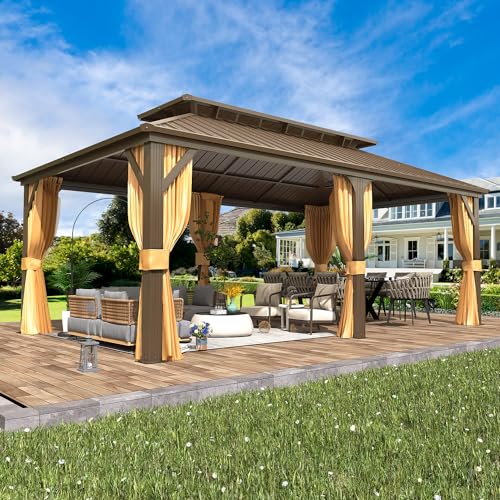
【GALVANIZED STEEL ROOF】- Beautiful hard metal top instead of normal fabric or polycarbonate material.Compare to a traditional soft top,this kind of gazebo roof is strong enough to withhold any heavy snow and offer unbeatable stability in windy conditions.

Champagne Powder Design: Our gazebo add elegance to your outdoor space with a premium champagne powder coating, sparkling with shimmer and a vibrant finish that stays like new for over 3 years.
Inspiring Examples of Canopy Draping in Events
When planning an event, various examples of canopy draping can serve as inspiration to enhance the overall aesthetic. Focus on symmetry for a balanced visual experience. Create openness by employing tiebacks that frame scenic views. Incorporate floral accents into themed events to reinforce style. Pooling fabric at the base adds a luxurious touch, creating soft layers that invite interaction. Utilize lighting elements strategically to transform spaces into immersive environments. For larger events, consider draping across high ceilings to create an expansive feel. Choose color-coordinated fabrics to achieve a cohesive look. Experiment with sheer materials for a light, airy effect. Always remember to measure your space beforehand to guarantee proper fit and coverage. Adding waterproof mattress pads can provide comfort and protect against spills, ensuring the elegance of your event is preserved.
Frequently Asked Questions
How Much Does Tent Draping Cost?
Tent draping prices typically range from $4 to $20 per linear foot, influenced by fabric options and quality. Event budgets should also consider installation fees, rental costs, and additional accessories like lighting, affecting overall expenses.
How to Attach Curtains to Pop-Up Canopy?
To attach curtains to a pop-up canopy, he utilized various curtain attachment methods, considering fabric compatibility, securing corners, and decorative weights for outdoor events, while effective tieback techniques enhanced the aesthetics and provided booth privacy solutions.
How to Cover a Pole With Fabric?
To cover a pole with fabric, one should focus on pole wrapping using appropriate fabric selection. Consider design inspiration and installation techniques, incorporating decorative finishes, color coordination, fabric layering, and draping styles to suit event themes.
What Fabric Is Used for Tent Draping?
Tent draping often utilizes lightweight chiffon and organza, alongside luxurious silk and satin, balancing textile weights with eco-friendly options, while considering color choices, patterns, durability, and weather resistance for graceful, lasting aesthetic appeal.


