As an Amazon Associate, we earn from qualifying purchases. Some links on this site are affiliate links at no extra cost to you. Our recommendations are based on thorough research and editorial judgment.


Box Spring Lifespan: Signs It’s Time to Replace or Upgrade

Box springs generally last between 8 to 10 years. Key signs for replacement include visible sagging, creaking sounds, and gaps in the structure. Unexplained aches during sleep may indicate insufficient support. Ignoring these signs can result in mattress damage and discomfort. Consider alternatives like platform beds or slatted foundations for better support. Always assess compatibility with your mattress type before upgrading. Understanding these factors can help improve your overall sleep quality and comfort. More information follows.
Key Takeaways
- Box springs typically last 8 to 10 years, but high-quality versions can last over 20 years, while cheaper options may last only 2 to 3 years.
- Signs indicating replacement include visible sagging, creaking noises, excessive age, and unexplained aches suggesting lack of support.
- Gaps and structural damage in the box spring can lead to inadequate mattress support and impact sleep quality.
- Not using a foundation can void mattress warranties and lead to increased wear, uneven pressure distribution, and reduced airflow.
- Consider modern alternatives like platform beds or adjustable bases for improved support and longevity, ensuring compatibility with your mattress type.
Understanding the Purpose of a Box Spring
You may be interested


A box spring serves as an essential foundation for mattresses. It provides the necessary support to guarantee proper weight distribution and spinal alignment, enhancing overall sleep comfort. Traditionally, box springs were made with a wooden frame filled with springs, but modern versions often utilize a fabric-wrapped frame without springs. Despite this change, their purpose remains the same. Regularly assess your box spring for signs to look for wear and tear. If it shows damage or sagging, it might be time to replace your box spring. Experts recommend replacing box springs every 8 to 10 years to maintain adequate support. Additionally, ensuring that your bed setup includes supportive items, like knee pillows for side sleepers, can enhance overall sleep quality. Taking these steps guarantees your mattress continues to perform effectively, securing a comfortable night’s sleep for years to come.
How Long Do Box Springs Last?
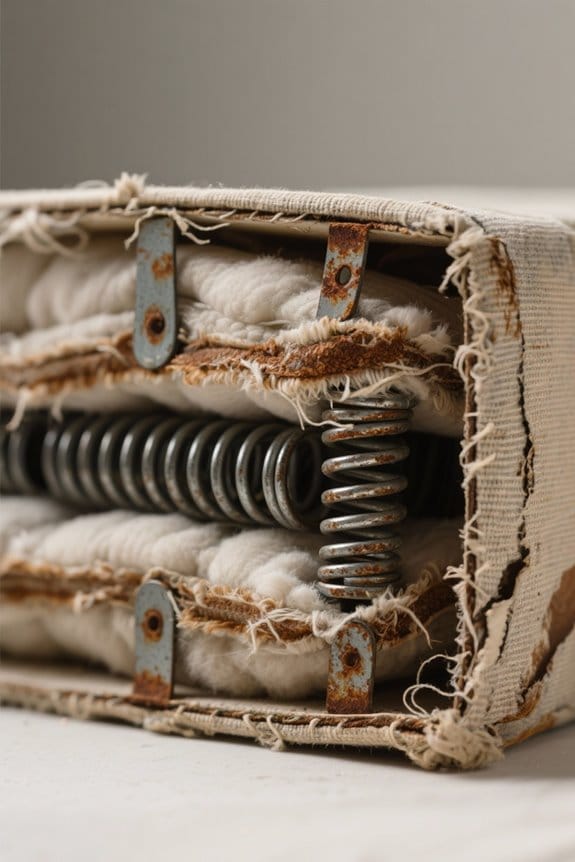
Box springs typically last around 10 years. However, their lifespan can vary based on quality and usage. High-quality box springs may endure over 20 years, while cheaper ones might last only 2 to 3 years. Aging can lead to wear and sagging, reducing their ability to provide adequate support. Regularly inspect the box spring for any signs of damage or deterioration that could affect sleep quality. Users should consider factors like weight and frequency of use, as these can influence longevity. Experts recommend planning to replace box springs every 8 to 10 years. Upgrading helps guarantee ideal sleep hygiene and comfort, making it essential for anyone prioritizing good rest. Additionally, many box springs feature weight capacities that cater to different user needs, contributing to their overall durability.
Signs Your Box Spring Needs Replacement
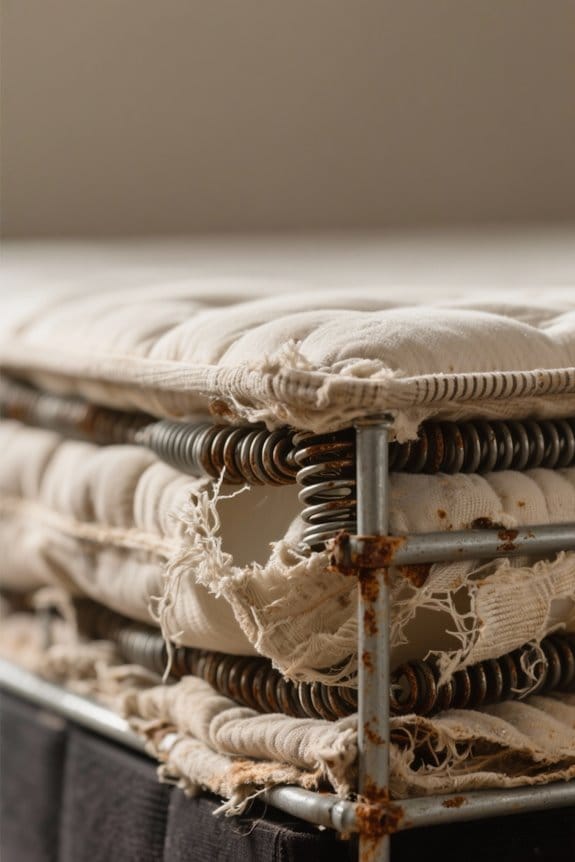
Regular inspection of a box spring is vital for maintaining ideal sleep conditions. Signs of decay in structure can lead to discomfort. Look for visible sagging or indentations. These indicate a loss of support for your mattress. If the box spring is creaking or squeaking, it often suggests structural issues requiring replacement. Do not ignore gaps; they contribute to inadequate stress support needed for proper rest. If you wake up with unexplained aches and pains, your aging box spring may not provide sufficient support for the box spring and mattress. Generally, consider replacing your box spring every 8 to 10 years to guarantee comfort. Assess these signs routinely to maintain restful, restorative sleep. Additionally, choosing breathable, moisture-wicking materials in your bedding can further enhance your sleeping environment and comfort levels.
What Happens If You Don’t Use a Foundation?
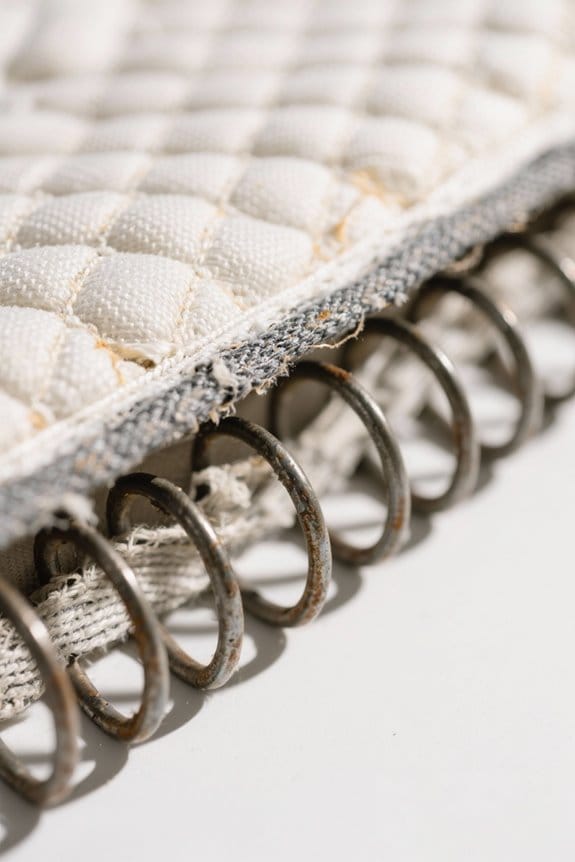
Not using a proper foundation for a mattress can lead to several significant problems. A box spring provides essential support, enhancing mattress longevity and guaranteeing ideal comfort. Without it, uneven pressure distribution can cause faster wear and sagging, leading to a shorter lifespan for the mattress. Reduced airflow under the mattress due to lack of foundations made for support may also increase heat retention and facilitate mildew growth. Additionally, height without a proper foundation affects convenience getting in and out of bed. Finally, not using the recommended support system can void your mattress protection, leaving you exposed to defects. Prioritize proper support to avoid health issues and promote a restful night’s sleep. Furthermore, selecting a foundation that can support higher weight capacity is crucial for heavier sleepers to ensure durability and stability.
Alternatives to Box Springs
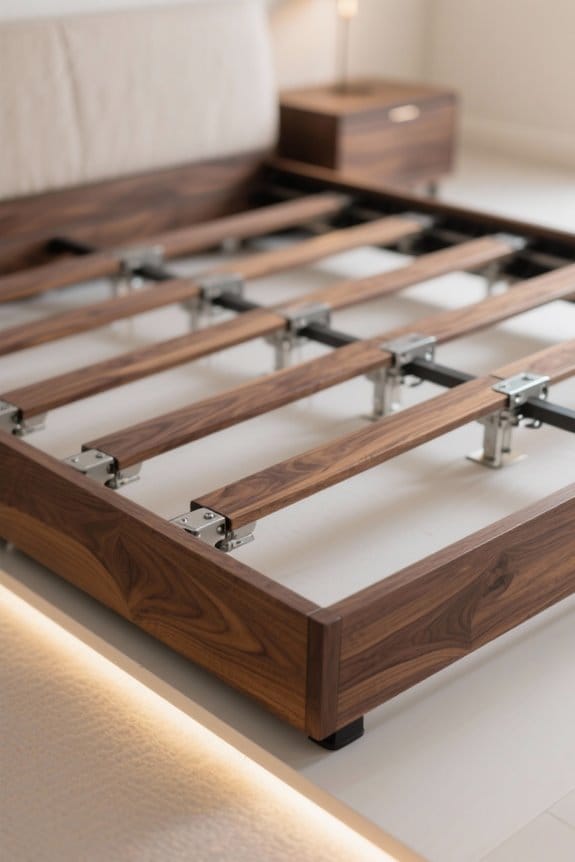
When exploring alternatives to box springs, several options offer effective support for mattresses. Platform beds provide solid support for various mattress types without needing extra accessories. Slatted foundations promote airflow and support, making them compatible with multiple mattress types. Adjustable bases allow users to elevate their mattress for personalized comfort and are ideal for those with health or mobility needs. Bunkie boards are ultra-thin boards fitted under a mattress, enhancing support without adding bulk. Many modern memory foam and latex mattresses can be used on solid surfaces or adjustable bases, eliminating the necessity of a box spring. Evaluate these options based on personal preference and mattress compatibility to guarantee the best support and comfort. Additionally, consider that split box springs can provide a low-profile design ideal for tight spaces.
Benefits of Upgrading Your Sleep System
Upgrading a sleep system can lead to substantial improvements in overall comfort and support. A new mattress guarantees your body receives the necessary support, reducing aches and pains. Enhanced comfort directly correlates to better sleep quality, which can improve mood and productivity. Modern sleep systems also promote airflow, helping to regulate temperature and enhance hygiene by minimizing moisture and allergens. A quality mattress typically lasts around 7 to 10 years, making an upgrade a wise investment for long-term benefits. Consider adjustable bases for personalized comfort and support that cater to individual sleep preferences. Ultimately, investing in a new mattress and box spring extends the lifespan of your sleep system, proving cost-effective by preventing premature wear and tear. Additionally, incorporating options with hypoallergenic properties can further enhance your sleep experience by addressing sensitivities and allergies.
Maintenance Tips for Extending Box Spring Lifespan
Maintaining a box spring is essential for extending its lifespan and ensuring ideal support for a mattress. Clean your box spring every three months to prevent dust mites and allergens. Rotate it 180 degrees every three to six months to promote even wear. Avoid excessive force, such as jumping on the bed, as this can damage internal components and accelerate deterioration. Regularly inspect your box spring for signs of wear, like noise or visible sagging, particularly if it is nearing the 8-10 year replacement mark. Additionally, protect your box spring by keeping it covered with a protective cover. This shields it from dust, moisture, and physical damage, ultimately enhancing its lifespan and maintaining the integrity of your sleep system. Incorporating breathable materials in your mattress choice can also contribute to overall comfort and durability.
Selecting the Right Box Spring or Foundation
Choosing the right box spring or foundation is crucial for mattress performance and longevity. Assess your mattress type before selection; traditional innerspring mattresses pair best with box springs, while foam and latex mattresses require solid foundations or adjustable bases. Ascertain the foundation provides the support needed; a mismatched combination can lead to increased wear and may void warranties. Look for durable materials and stable construction to enhance airflow, which prolongs your mattress lifespan. Consider personal needs when deciding between adjustable bases for flexibility and platform beds for simplicity. Additionally, regularly verify compatibility with your mattress, as many manufacturers specify support systems for peak performance. Don’t forget a high-quality mattress protector for added longevity and cleanliness. Moreover, selecting a waterproof and dustproof material for your foundation can significantly enhance its durability and ensure it withstands environmental elements.
Frequently Asked Questions
How Do I Know if My Box Spring Needs Replacing?
To determine if a box spring needs replacing, assess for box spring wear, structural damage, noise issues, uneven support, sagging center, and mattress compatibility. Personal comfort is essential; upgrades may enhance sleep quality considerably.
How Often Do You Need to Change Your Box Springs?
Box springs typically need changing every 8 to 10 years. Yet, seasonal checks reveal essential maintenance insights. Durability factors, mattress compatibility, and support features impact sleep quality, prompting upgrades to safeguard well-being and style options.
Is It Okay to Sleep on a 20 Year Old Mattress?
Sleeping on a 20-year-old mattress is unwise due to significant aging effects, compromising support systems and mattress durability. This can lead to comfort issues, reduced sleep quality, and potential health implications such as increased discomfort and allergies.
What Does a Bad Box Spring Look Like?
A bad box spring resembles an aging ship adrift; worn springs and a sagging center produce creaking noises, while loose corners and visible damage create an uneven surface, offering poor support and jeopardizing a restful journey.


